A service-design project with the PSA Charitable Foundation that turns one-off caregiver respite activities into a sustainable, low-barrier “open studio” — connecting a physical space, a co-creation wall and an online platform into one loop.
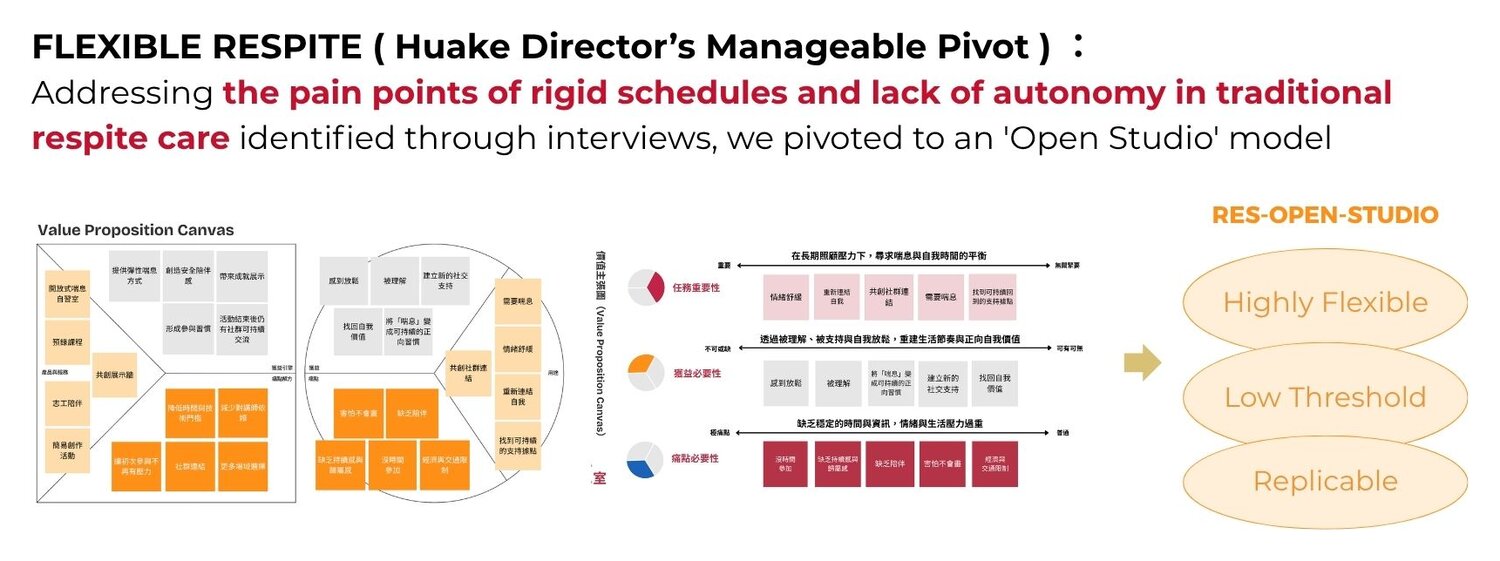
Family caregivers carry chronic, unpredictable stress — fragmented time, scattered information, and emotional load with no outlet. Yet most respite care runs on a “lecturer + fixed timeslot” model that can't bend to their reality.
In our survey (51 responses), 85% couldn't attend because of rigid scheduling, and many didn't even know respite activities existed. A one-off class can't become lasting support.

Interviews kept surfacing the same two pains: rigid schedules and a lack of autonomy. So we reframed respite from a program into a place, built on three principles:
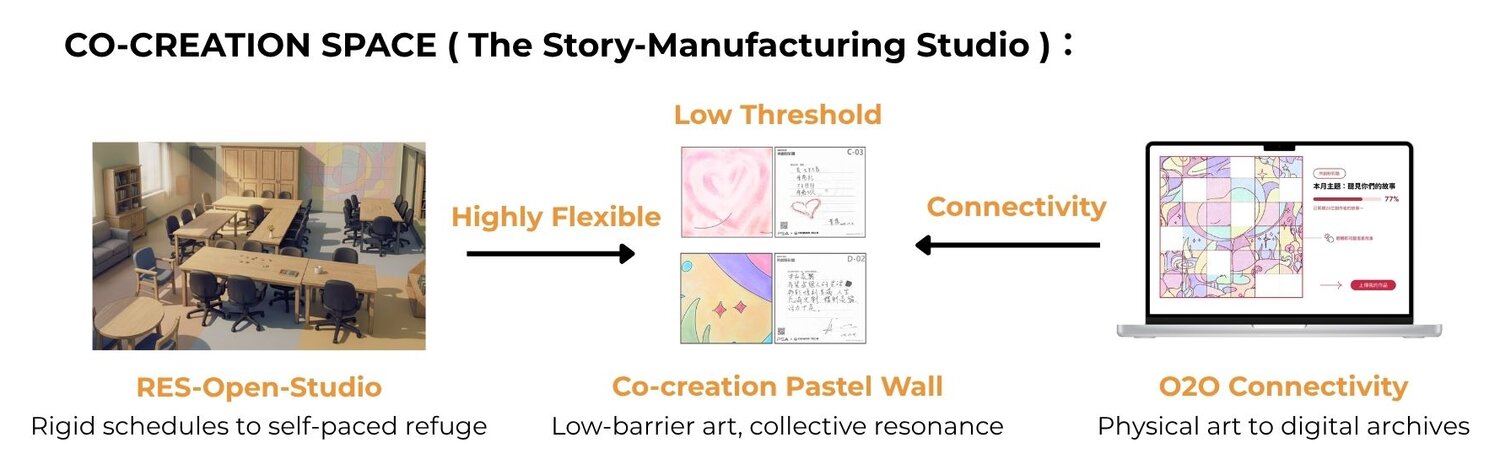
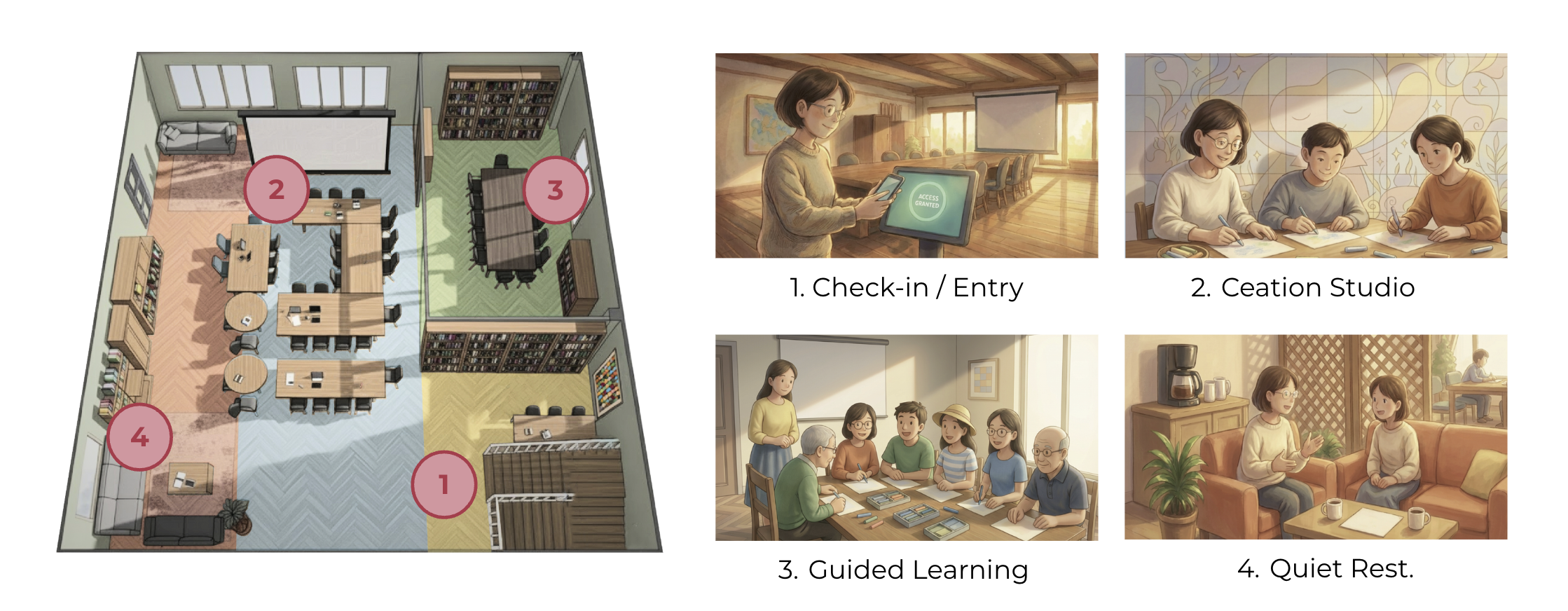
The studio is organized around free choice. From the value map we identified three caregiver personas — the skill-learner, the social-connector and the pure-rester — and gave each somewhere to land:


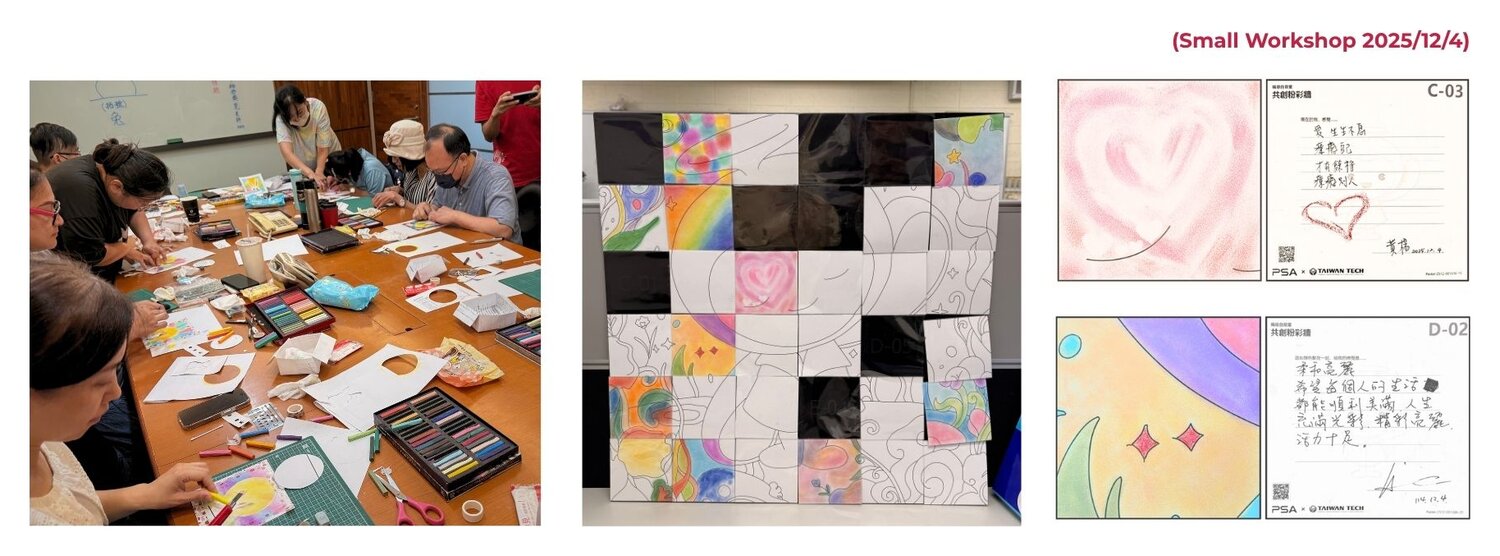
The co-creation pastel wall turns low-barrier art into collective resonance. Each caregiver finishes one small tile and writes a few words on the back — so the work is not only seen but understood and remembered.
Tile by tile, individual moments assemble into one shared picture: a visible record of collective company.
An O2O loop ties the experience together so it can run reliably and scale:


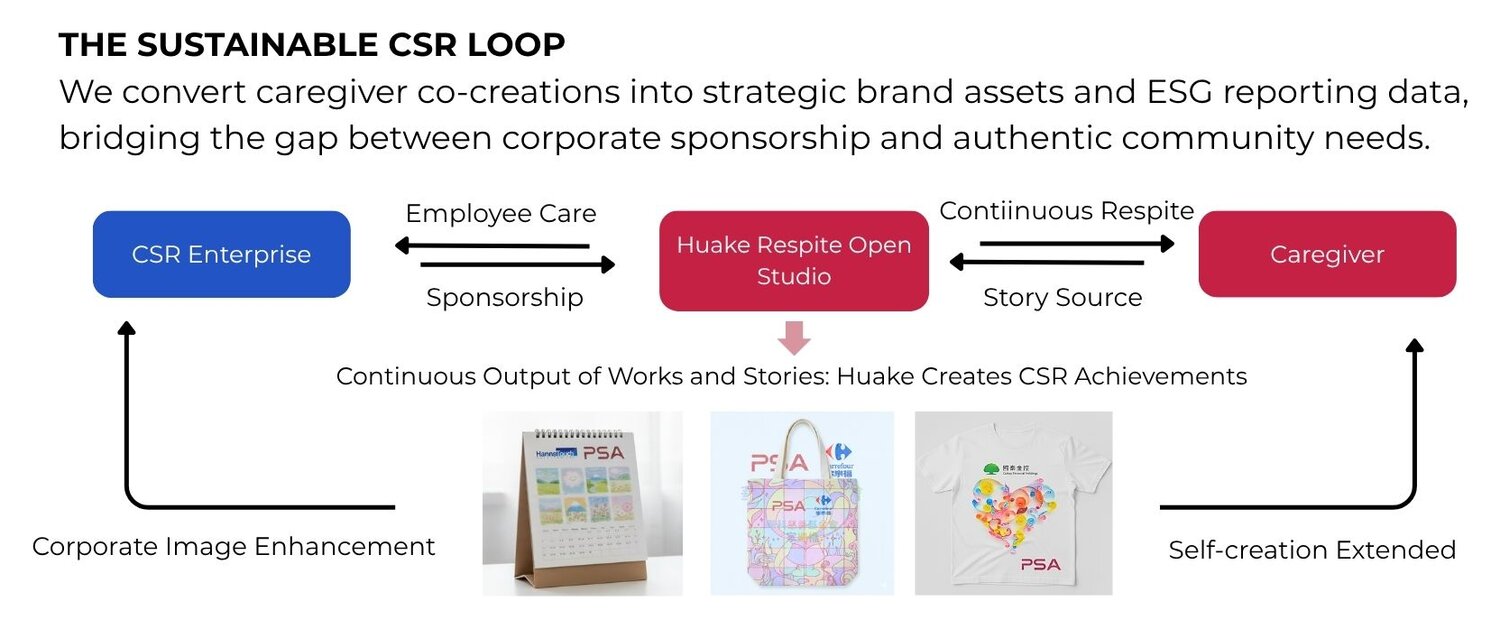
For respite to be permanent, it needs a funding engine. We designed a CSR loop: enterprises sponsor and adopt the studio; caregiver co-creations become calendars, totes and tees plus ESG reporting material; corporate purchase and image-building recirculate resources back into operations.
The result is a service that is replicable, self-sustaining, and bridges genuine community need with corporate support.
下載 2025 服務設計成果專刊,或觀看完整專案影片 — 收錄研究、服務藍圖、空間規劃與共創工作坊紀錄。